Business
Using Text Messages With Customers the Right Way
By Fidyan Ahmed, founder · Published · Last updated · 7 min read
On this page
Text message marketing for a small business works when the note is useful and the person asked for it. A reminder about tomorrow's visit is welcome. A blast to every old invoice is how you get blocked, and it can break the rules. Start with consent, a short template, a sane hour, and a real stop.
Key takeaways
- Get a clear yes before you send commercial texts.
- Write templates a customer can read in one glance.
- Send sales notes in the daytime, in the customer's local time.
- Honor STOP. Do not keep selling to that number.
Consent rules
Consent means the person agreed to hear from you by text. The FCC's guide to unwanted robocalls and texts was last updated 20 Nov 2026. Checked 23 Nov 2026, it says commercial texts need written consent, and that people may opt out of a robotext at any time, in any reasonable way. This article is a plain reading for owners. It is not legal advice. If your list is large, ask a lawyer who knows the Telephone Consumer Protection Act.
The rule text is in 47 CFR 64.1200 (eCFR, checked 23 Nov 2026). It says a reply such as stop, quit, end, revoke, opt out, cancel, or unsubscribe is a reasonable way to revoke consent. It says you should honor that in a reasonable time, not to exceed ten business days. It also says no one should start a telephone solicitation to a residential subscriber before 8 a.m. or after 9 p.m. local time at the called party's location. Use that daytime window for sales texts unless a lawyer tells you your case is different.
Picture a plumber who exports every number from last year's invoices and sends a water heater special. Many of those people asked for a repair, not a promo list. Some will be angry. Some will report the text. The discount is not worth the complaint. A fair path is a line on the invoice or the form: "Tick here if we may text you occasional offers." People who tick it are the list. People who do not tick it still get texts about their own open job, if you said you would send those.
This week, find where you collect numbers. Add a clear yes for marketing texts, stored with the date. Do not rely on a pre ticked box. CRM setup is where that yes should live so the next person on the crew does not text the wrong list. Keep job updates and offers in separate buckets.
Templates
A good text is short, names the company, and says what to do. A bad text is a wall of words, a mystery link, and no way to tell who sent it. Write templates before you need them. You will send better notes on a busy morning if the words already exist.
Use a small set. One template confirms the appointment and names the time window. One says the tech is on the way, without a fake minute count you cannot keep. One asks for an honest review after the work, with the real review link. One offers a seasonal tune up only to people who agreed to offers. Read each template out loud. If you run out of breath, it is too long.
Picture an electrician who sends "We're on the way" with no name and a short link. The customer thinks it is a scam and does not open the door. The same text with the company name, the tech's first name, and the job address feels like the visit they booked. Put the company name in every template. Do not shorten the link so far that the customer cannot see where it goes. The Review Link and QR tool can make the review link you drop into the after job text.
This week, write those templates and save them where the whole office can copy them. Do not let every tech invent a new style. Email automation can carry the longer version of the same note when a text is the wrong size. The text should still stand alone, because many people will not open the email.
Timing
Timing is about the customer's day, not about when you remember. A reminder the evening before a morning job is useful. A promo at dinner can wait. A "we are outside" text is welcome when you are actually outside. A text at midnight is not a clever growth idea. It is a way to lose the customer.
Match the clock to the place you are texting. If you serve more than one time zone, do not send the whole list at your shop's bedtime. The rule's quiet hours are written in the local time at the person's end. When you are unsure, stay inside a normal workday. Job reminders can sit closer to the visit. Sales notes can sit late morning, after people have started the day.
Picture a cleaner who reminds clients before dawn because that is when the crew lead starts the van. The client is asleep and wakes up annoyed. Move the automatic send to the evening before, and let the crew lead send "we are on the way" by hand when the van really leaves. Automation should not outrun the truth. If the visit moves, the text should move too. A reminder for a canceled day is worse than no reminder.
This week, look at the send times in your tool. If any sales text can leave before 8 a.m. or after 9 p.m. local time, change the window. Say the window in the consent line so people know what they agreed to. Do not promise "instant replies" by text if nobody watches the inbox after hours.
Opt out
Opt out is the safety valve. Every marketing text should tell people how to stop, in words they will notice. "Reply STOP to end these texts" is plain. Do not hide it. When they reply, stop. Do not send a paragraph that tries to win them back. A single confirmation that you stopped, with no new offer, is the polite close. The rule text says that confirmation should not include marketing.
Treat other clear words as a stop too. If a reasonable person would read "please remove me" as a no, remove them. Do not require them to use only the word you prefer. Do not make them call a number that nobody answers. If your texting tool cannot receive replies, the FCC guide still expects a reasonable way to opt out. Say that way in the text.
Picture a roofer whose tool keeps sending a weekly tip after a customer replied STOP. The customer screenshots the thread and posts it. The roof may have been excellent. The texts made the company look careless. Assign a person to check the stop list each week until you trust the tool. Automation should include that stop, not only the send. Never sell or share the numbers of people who said no.
This week, reply STOP to your own marketing text from a personal phone. Time how long the next promo still arrives. If it arrives, the opt out is broken. Pause the list until it is fixed.
Tools
You do not need a new app for every message. Many crews can start inside the CRM or the booking tool they already pay for. Turn on the appointment reminder there before you add a second system. Two tools that both text the same job will annoy the customer and split the record of who said yes.
Pick a tool that stores consent, shows the thread, and handles STOP without a spreadsheet. If the only option is a personal phone, you will lose the history when that person leaves the company. Business texts should live on a business number. Read the tool's public price on the vendor's own page. This guide will not guess a monthly bill. Compare that bill with the time you spend calling people who missed a reminder.
Picture an HVAC office that texts from several personal phones. A customer replies "STOP" to one number and gets a promo from another. Nobody can see the full thread. Move the number to one inbox the office shares. CRM setup is the project when the texts, the jobs, and the yes flags should be the same record. The booking guide is the partner article if the text is really about a time slot.
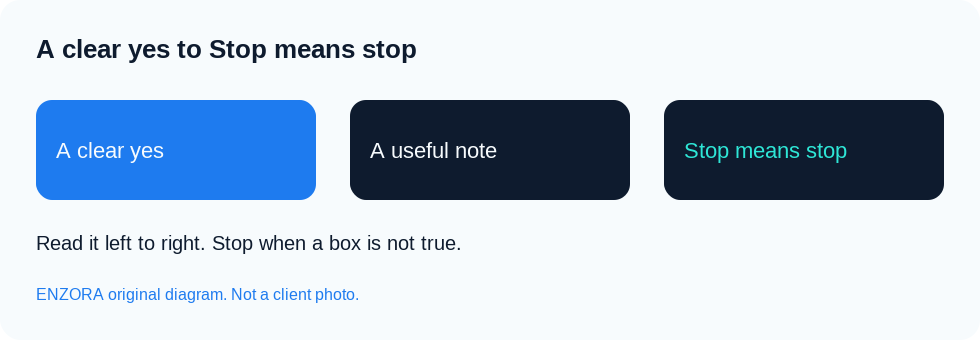
The text path diagram is yes, then a useful note, then stop if they ask. Use this table before you send a list.
| Text type | Needs a marketing yes? | Send when |
|---|---|---|
| Reply about their open job | No, they contacted you | As you work the job |
| Appointment reminder they were told about | Tell them at booking | Day before, daytime |
| On the way | Tell them you will text | When the tech is actually en route |
| Review ask | A simple ask after real work | After the job is done |
| Coupon or seasonal offer | Yes, written consent | Daytime, local time |
This week, pick one template and one list you are allowed to text. Send only that. The call guide still matters, because a text should never be the only way to reach a person who needs help now.
Next step
Want a check of the texts your site invites? Get a free site review. Tell us how you collect the yes. We will look at the form and the follow up. We will not invent a reply rate.
Questions
Can I text every customer in my old invoices?
Not for a sales blast. A past job is not the same as a yes to marketing texts. The FCC consumer guide says commercial texts need written consent. You can reply to a person who texted you about their own job. You should not upload a spreadsheet of old numbers and announce a sale. When in doubt, ask them first.
Is a web form enough for consent?
It can be, if the form says they agree to receive your texts, and they take a clear step such as a checkbox they tick themselves. Do not hide the agreement under a pre checked box. Keep a record of when they said yes and what you promised to send. This page is a plain reading, not legal advice for your shop.
What hours are safer for a sales text?
The rule linked in this guide bars telephone solicitations to a residential line in the early morning and late at night. A careful shop uses that same daytime window for sales texts. Reminders about a job they already booked can sit closer to the visit, still at a humane hour. Do not text a promo in the middle of the night because the tool allows it.
What if they reply STOP?
Stop selling to that number. The FCC says people may opt out of robotexts at any time, in any reasonable way. The rule text treats words such as stop, cancel, and unsubscribe as a clear revoke, and the consent section links the page that says how fast to honor it. Do not argue by text. Do not sell the number to anyone else.
Are appointment reminders marketing?
A reminder about a visit they already booked is different from a coupon blast. Still say, when they book, that you will text the time and a way to change it. Keep the reminder free of a new offer if they only agreed to job updates. If you want to add a promo, get a yes for that kind of text too.
Was this helpful?
Related ENZORA services
Want help with your website?
Get a fixed quote from the ENZORA team. We work with businesses worldwide.