Business
How Much Should a Home-Service Business Spend on Ads?
By Fidyan Ahmed, founder · Published · Last updated · 7 min read

On this page
An advertising budget for a small business should start with the jobs you can finish, not with a number you saw in a thread. This guide does not name a dollar amount. Your books are the only honest source. Use them. Then choose a channel that matches how customers already look for you.
Key takeaways
- Decide how many jobs you can take before you pick a spend.
- A booked job from ads has to leave enough after labor and materials.
- Search ads, Local Services ads, and Meta ads do different jobs.
- Use your own slow and busy months. Do not copy a national calendar.
Start from jobs, not a spend guess
The first question is capacity. How many jobs can the crew do this month without dropping quality or ignoring the phone? That number caps the leads you should buy. Leads you cannot serve are not growth. They are missed calls with your name on them.
Write three lines. Jobs you can still fit on the calendar. Jobs you want more of. Jobs you are full on. Ads should point at the first two. They should not shout about a job you cannot schedule.
Picture a two person plumbing crew. They can add a few water heater visits and they are full on remodel work. An ad about whole house repipes will create calls they do not want. An ad about heater repair matches the open slots. The budget follows the open slots.
Do not begin with "what do other plumbers spend?" You do not know their margins, their debt, or their close rate. You know your calendar. Start there. If the calendar is empty and the phone is quiet, a small test on one job is enough to learn. You still set the test from jobs, not from a slogan.
Track the source. If you do not ask "how did you hear about us?" you will guess. A guess is how a budget grows with no jobs behind it. Try the Ads Budget Calculator.
This week, write the three lines and circle one job you can take more of. That job is the only thing the next ad should mention. Google Ads can aim a campaign at that job when you are ready.
Your break even cost per job
Break even here means a simple comparison you do with your own numbers. You are not looking up an industry average. You are asking whether the ads that booked a job left you enough after the costs of that job.
Pick a job type. From your books, note what you kept after materials, labor, and the normal truck costs for that kind of visit. You do not need to publish the figure. You need it on a private note. Then note what you spent on ads that you can tie to those visits. Divide the ad spend by the booked jobs from ads. That is your cost per booked job. Compare it with what you kept. If the cost eats what you kept, the ads did not pay for that job type.
If you cannot tie a job to an ad, do not invent the tie. Mark the source as unknown. Unknown is not "from ads." It is a tracking problem. Fix tracking before you raise spend. A call asset, a unique form, or a question on the phone can be enough for a small shop.
Picture a painter who feels the ads "seem busy." The click report is high. The job book shows two paint jobs and a lot of people asking for a service the ad did not mean. The cost per booked paint job is the number that matters. The click count is not.
Do not compare your private note with a dollar figure from this article. There is not one. A coach who quotes a single right cost for every trade is guessing. Your note is the standard.
This week, do the division for one job type from last month. If you ran no ads, write "no ad jobs" and skip the division. The copy guide is the next read when the offer itself is fuzzy.
Google Ads vs Local Services ads vs Meta
These channels are not three sizes of the same thing. They show up in different places and they ask for different proof.
Search ads show when someone types a query. You write the lines. The responsive search ad page, checked 23 Nov 2026, explains the limits. The click should open a page about that job.
Local Services ads are a different product. The overview, checked 23 Nov 2026, says the ad shows services, area, hours, and reviews, then opens a profile. The requirements say not to mislead people about licenses, insurance, area, or prices, and not to pass the lead on. You must pass screening.
Meta ads are photos and text in Facebook and Instagram feeds. They reach people who were not typing the job. They need a real photo and a clear page. Meta ads is that service. This guide does not invent a cost.
| Channel | Best fit | Weak fit |
|---|---|---|
| Google search ads | Someone is typing the job | You have no page for that job |
| Local Services ads | You can pass screening and you want profile leads | You would need to stretch a license or an area |
| Meta ads | You have real photos and a clear page | You only have a logo and a slogan |
Picture a roofer after a storm. Search ads catch people typing roof leak. Local Services may fit if the profile is true and screening is realistic. Meta can show a roof photo you are allowed to post. If the license or the photos are not ready, skip that channel.
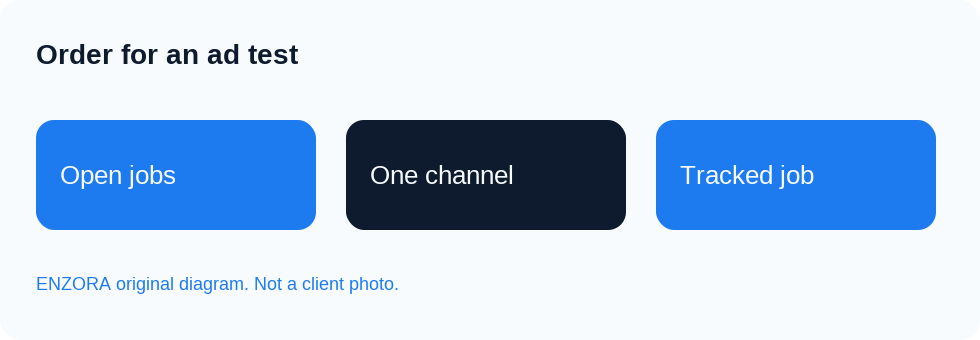
This week, pick one channel. Write why it matches the job you circled. Leave the other two off until the first one has a tracked job. The job diagram is the order: capacity, then channel, then a tracked job.
Seasonal budgets
Seasons are yours, not a chart from another state. A cooling company in Phoenix and a heating company in Minnesota do not share a busy month. Look at your booked jobs by month for the last year. If you do not have a year of books, use the months you remember and mark them as memory, not as a report.
Put more of the test budget in the months when you can still take the work and when people already call. Pull back when the crew is overfull or when the job is rare. A quiet month can be a time to fix the page, not a time to force spend.
Do not copy a holiday sale script if you do not run a sale. A fake countdown is a trust problem and can be a policy problem if the offer is not real. Say the season in plain words. "We are booking spring tune ups" is enough if it is true.
Picture a landscaper. Mowing inquiries rise when yards grow. Design inquiries may come earlier. The ad in each month should name the job that month can still accept. The budget can move with that list. It does not need a new brand every season.
Watch the phone. If ads create calls you cannot answer, the season is telling you to slow down. Speed of the reply matters more than a larger spend. The landing page guide helps the page keep up.
This week, mark the next three months as push, hold, or fix the page. Put the ad test only in a push month for the job you can do.
A worked example with your own numbers
Use a blank page. Do not borrow figures from this article. There are none on purpose.
Line 1: the job you want more of. Line 2: how many of those jobs you can still schedule this month. Line 3: how many of those jobs last month came from ads. If you do not know, write unknown. Line 4: what you spent on those ads. Line 5: what you kept after materials and labor on a typical one of those jobs. You already know line 5 from your books. Keep it private.
If line 3 is unknown, your next task is tracking, not a bigger budget. If line 3 is zero, the ads did not book that job. Read the queries and the page before you add spend. If line 4 eats line 5, the job type is a bad ad target until the page, the close rate, or the offer changes.
Picture the lines filled by a garage door owner. The job is spring repair. Capacity is the openings on the board. Ad jobs are only the ones the form tagged. The decision is a continued test, a no, or a fix. Your board is not theirs.
Do the math on paper. Showing the worksheet to a partner is useful. Showing it to a salesperson who wants a larger budget is useful too. You can point at line 2 and say the crew is full.
Google Ads and Meta ads both start with this sheet in a serious conversation. If a proposal skips capacity and talks only about reach, ask for the sheet. The copy guide is how the words should read once the sheet says yes.
This week, fill the five lines for one job. Decide yes, no, or fix. Do not open a second channel on the same day.
Want us to fix this for you?
Get a free fix plan. Tell us the job you want more of. Contact ENZORA.
Try the free UTM Builder on a page you already have.
Questions
Is there a correct percent of sales to spend on ads?
This guide will not give you one. A percent from a stranger ignores your crew size, your season, and your margin. Start with how many jobs you can take. Then see what a booked job from ads costs you, using your own books. If a blog quotes a universal percent, ask where it came from before you copy it.
Should I start with Google Ads or Local Services ads?
They are different products. Search ads use the headlines you write and a page you choose. Local Services ads show a profile with your services, area, hours, and reviews, and Google screens the business. Read both help pages linked in this article. Pick the one that matches how you already win work. You do not have to run both on day one.
Where do Meta ads fit?
Meta ads are the ads people see in Facebook and Instagram feeds. They can show a photo of work you are allowed to post. They do not replace a search ad for someone who typed a job just now. Use them when you have real photos and a page that can take the click. If you have neither, fix that first.
How do I know the ads paid for themselves?
Count jobs that came from the ad, not clicks. Ask every new customer how they found you, and use a tracking number or a form if you have one. Compare the ad spend with what you kept after labor and materials on those jobs. If you cannot see which jobs came from ads, you cannot judge the budget yet.
What if I cannot take more jobs?
Then more ad spend is the wrong move. A full calendar does not need more leads. Pause or narrow the ads until you can answer the phone and do the work. Spend the quiet week on the page and the profile so the next busy month converts better. Buying leads you will ignore trains people to call someone else.
Was this helpful?
Related ENZORA services
Want help with your website?
Get a fixed quote from the ENZORA team. We work with businesses worldwide.